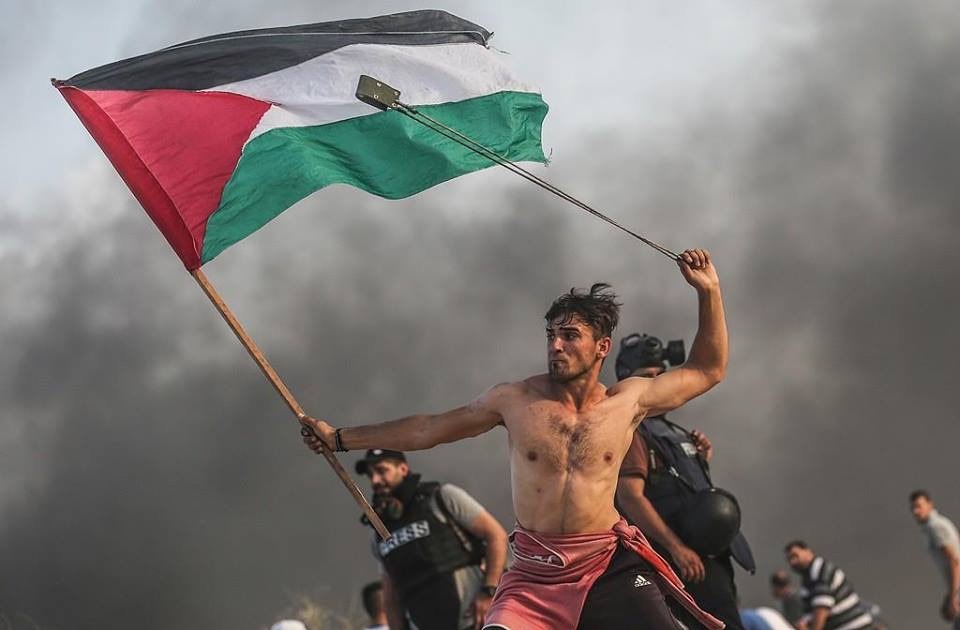
“The flag I was carrying is the same one I always hold in all the other protests I’ve attended. My friends make fun of me, saying it is easier to throw rocks without holding a flag in the other hand, but I got used to it.
If I get killed, I want to be wrapped in the same flag. We are demanding our right of return, and protesting for our dignity and the dignity of our future generation.”
“Romanticising the image of a desperate man taking on an army allows us to justify its circumstances and distract ourselves from the grim truth that, in the real world, David rarely defeats Goliath. Aed could die today, tomorrow, or the week after that. If he keeps protesting, it is almost an inevitability.
[…]
“In the most tasteless responses, social media users have remarked on Aed’s chiselled jaw and physique. This overt fetishisation of his suffering is obscene, but the idea that the pain and anguish of marginalised groups is a price worth paying for beautiful art is a notion far older than even the paintings of Delacroix.
“From Asad’s chemical weapon attacks in Syria, to the bodies of refugee children washed up on the beaches of Europe, images have a radical, empathy-spreading power that can change the world. But the flippant reaction this particular shot, of someone literally risking being shot, represents our growing detachment from pain and lack of collective responsibility for it.
“Don’t let this photograph fool you: there is nothing beautiful or poetic about the oppression of Palestinians. Beyond the lens, the constant misery of wasted life and unnecessary death in Gaza continues – we must not let that drift out of focus.”
“Don’t let this photograph fool you: there is nothing beautiful or poetic about the oppression of Palestinians. Beyond the lens, the constant misery of wasted life and unnecessary death in Gaza continues – we must not let that drift out of focus.”

 lyannas tumblr back up